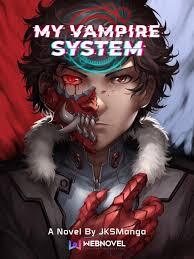
My Vampire System: Power, Blood, and the Relentless Evolution of Quinn Talen
The latest stretch of My Vampire System pushes Quinn Talen further into the razor-thin space between savior and monster, where every new evolution of his Vampire System demands a price in blood, loyalty, and identity.
In JKSManga’s My Vampire System, power is never static. It mutates, compounds, and corrupts. Even without seeing the full novel at once, the provided chapters make one thing unmistakably clear: Quinn Talen’s journey has shifted from survival to dominion. The Vampire System that once felt like a lifeline now reads more like a throne—one built on calculated choices, dangerous alliances, and the looming shadow of the Human vs Dalki war.
This article treats those chapters not as isolated episodes, but as a cohesive arc of escalation. We’ll explore how Quinn’s blood evolutions and cultivation of strength reshape the balance of power, how the world building deepens the mythology of vampires and humans, and how relationships strain under the weight of destiny. Rather than retelling events, we’ll focus on what they mean—why these developments matter for the future of the series and why they keep My Vampire System at the center of the fantasy web novel conversation.
Main Story Development
Across the examined chapters, the narrative of My Vampire System pivots around consolidation—of power, of identity, and of factions. Quinn Talen is no longer just reacting to threats; he is actively shaping the battlefield. The Vampire System, once a mysterious interface guiding his growth, now feels like an extension of his will, and the story leans into the consequences of that control.
The Human vs Dalki conflict continues to serve as the macro backdrop, but the focus narrows onto how vampires, humans, and hybrid forces position themselves in anticipation of larger clashes. Political maneuvering intensifies: vampire leaders test Quinn’s authority, human military structures reassess their dependence on him, and the Dalki presence—whether direct or looming—acts as a constant reminder that every internal dispute is a luxury they can barely afford.
What stands out is how the story uses these chapters to transition from “learning the system” to “owning the system.” Quinn’s decisions are less about discovering what he can do and more about deciding what he should do. That moral shift is the spine of this section of the novel, and it’s where the tension truly lives.
Important Character Growth
Quinn Talen’s character development in these chapters is defined by a growing comfort with power—and an equally growing discomfort with what that power demands. He has evolved from a reluctant user of the Vampire System into a figure others look to as a leader, a weapon, or a threat. The narrative repeatedly places him in situations where he must choose between personal restraint and strategic brutality.
His internal conflict is not the naive “Am I a monster?” question of early arcs. Instead, it’s a colder, more mature calculus: “How much of myself am I willing to sacrifice to protect what matters?” That shift in tone signals a character who has seen too much to cling to simple morality, yet refuses to abandon it entirely. It’s a nuanced evolution that keeps Quinn compelling even as his power skyrockets.
Secondary characters—friends, allies, and rivals—reflect this change back at him. Some grow wary of how quickly he adapts to new levels of strength. Others become fiercely loyal, seeing in him the only realistic hope against the Dalki and other existential threats. The result is a web of relationships that feel increasingly fragile, not because of lack of trust, but because of the sheer scale of what Quinn is becoming.
Power Progression Analysis
Power progression has always been one of the core appeals of My Vampire System, and these chapters double down on that promise. The Vampire System continues to function as a cultivation framework, but the emphasis shifts from simple leveling to qualitative transformation. Blood evolutions, new vampire abilities, and layered combat techniques all contribute to a sense that Quinn’s growth is not linear—it’s exponential.
We see the narrative exploring how different bloodlines, skills, and system upgrades interact. Rather than just stacking stats, Quinn’s power progression becomes about synergy: combining abilities in unexpected ways, exploiting weaknesses in enemies who underestimate what a “vampire” can do, and using the system’s mechanics as a strategic toolkit rather than a menu of flashy moves.
Combat sequences in these chapters are less about proving that Quinn is strong and more about demonstrating how he thinks. The Vampire System gives him options; his experience and ruthlessness determine which ones he chooses. That distinction is crucial, because it turns fights into character moments rather than mere spectacle.
World Building and Lore Expansion
Even within a limited slice of chapters, the world building of My Vampire System continues to expand in deliberate, layered ways. The lore surrounding vampires, humans, and the Dalki is not static; new details reframe old assumptions. We see hints of deeper histories behind vampire hierarchies, the origins of certain bloodlines, and the true cost of the powers Quinn is tapping into.
The Human vs Dalki war remains the central global conflict, but the narrative uses it as a pressure cooker for internal world building. Human factions debate how much autonomy to surrender to vampire allies. Vampire society grapples with the implications of Quinn’s unique system-based abilities, which don’t fit neatly into traditional structures. The Dalki, meanwhile, loom as a reminder that all this political and mystical complexity must eventually answer to raw survival.
What’s particularly effective is how the lore is revealed through consequence rather than exposition. We don’t just learn that certain vampire abilities exist; we see what happens when they’re used at scale, in war, in betrayal, in desperate last stands. That approach keeps the world feeling alive and dangerous.
Conflict Breakdown
Conflict in these chapters operates on three intertwined levels: personal, factional, and existential. On the personal level, Quinn Talen wrestles with the widening gap between who he was and who he is becoming. On the factional level, vampires, humans, and hybrids negotiate uneasy alliances, each with their own agendas. On the existential level, the Dalki threat and other looming forces remind everyone that time is running out.
The Human vs Dalki war is not always front and center in every scene, but its presence is felt in every decision. Characters justify morally gray actions by pointing to the larger war effort. Leaders gamble with lives, arguing that hesitation would cost even more. Quinn, caught in the middle, becomes both a symbol and a tool—someone everyone wants on their side, but few fully understand.
Internal vampire politics add another layer of tension. Quinn’s unique Vampire System and blood evolutions place him outside traditional hierarchies, which both empowers and isolates him. Some see him as a future ruler; others see him as a destabilizing anomaly. That friction fuels some of the most compelling confrontations in this stretch of the story.
Major Turning Point
A key turning point in these chapters is the moment where Quinn stops treating his power as something he must justify and starts treating it as something he must wield. The narrative marks this shift not with a single dramatic speech, but through a series of decisions where he chooses the path that secures victory, even when it costs him a piece of his old self.
This turning point reframes future conflicts. Enemies can no longer rely on Quinn’s hesitation. Allies can no longer assume he will always choose the gentler option. The Vampire System, once a mysterious guide, now feels like a weapon he has fully claimed. That change in posture raises the stakes for every future confrontation, because the line between hero and tyrant grows thinner with each calculated move.
What These Events Mean for Future Arcs
Looking ahead, the developments in these chapters set the stage for a more expansive, more dangerous phase of My Vampire System. Quinn Talen’s power progression and blood evolutions have pushed him into a tier where he can no longer blend into the background of any faction. He is a central piece on the board, and every major player—human, vampire, or Dalki—must account for him.
We can expect future arcs to lean harder into large-scale conflict, where Quinn’s strategic use of the Vampire System will determine not just who wins battles, but what kind of world emerges afterward. The cultivation aspect of his growth suggests that there are still higher levels to reach, but the emotional cost of each new evolution is likely to increase. The story has already hinted that certain powers come with irreversible consequences, and that theme is ripe for further exploration.
On the relationship front, the strain of leadership and power will likely test Quinn’s closest bonds. Allies who once saw him as a friend may start to see him as a distant figure, someone operating on a level they can’t fully comprehend. That emotional distance can be just as dangerous as any external enemy, especially in a world where betrayal is often a matter of survival.
In short, these chapters feel like the tightening of a bowstring. The arrow—Quinn’s fully realized potential—has not yet been loosed, but when it is, the impact will reshape the entire narrative landscape of My Vampire System.
Frequently Asked Questions
How does Quinn Talen’s Vampire System differ from typical cultivation systems in fantasy web novels?
Quinn’s Vampire System blends game-like mechanics with traditional cultivation, but what sets it apart is how deeply it’s tied to identity and morality. Instead of simply grinding levels, Quinn’s progress is marked by blood evolutions, unique vampire abilities, and system upgrades that force him to confront who he is willing to become. The system is less a neutral tool and more a mirror, reflecting the cost of every choice he makes in pursuit of power.
Is the Human vs Dalki conflict still central in these chapters?
Yes, the Human vs Dalki war remains the overarching conflict, even when it isn’t the immediate focus of every scene. The threat of the Dalki shapes political decisions, alliances, and the urgency behind Quinn’s cultivation and power progression. Every internal dispute—between humans, vampires, or hybrids—plays out under the shadow of that larger war, giving even smaller confrontations a sense of looming consequence.
How important are blood evolutions to Quinn’s character development?
Blood evolutions are crucial not just to Quinn’s combat strength, but to his narrative arc. Each evolution represents a step further away from his original human self and deeper into the world of vampires and high-level power. The story uses these evolutions to explore themes of transformation, alienation, and responsibility. As Quinn’s blood changes, so does the way others see him—and the way he sees himself.
Conclusion
The chapters under review showcase My Vampire System at a mature, confident stage of its storytelling. Quinn Talen’s journey has evolved from a desperate scramble for survival into a complex exploration of power, identity, and leadership. The Vampire System, once a mysterious mechanic, now functions as a living framework for both cultivation and character development, with blood evolutions and new abilities marking each major turning point.
What makes this segment of the story so compelling is the way it balances spectacle with substance. Yes, the power progression is thrilling, and the combat is inventive, but beneath every clash lies a deeper question: what kind of person—and what kind of world—will emerge from this escalating cycle of conflict? As the Human vs Dalki war intensifies and the lines between factions blur, Quinn stands at the center, a figure shaped by both his choices and his system.
If these chapters are any indication, the future of My Vampire System will not simply be about who is strongest, but about who can bear the weight of that strength without losing everything that made them worth rooting for in the first place.